
Dental Implants in Turkey Cost, Packages and Guide
EXCELLENTTrustindex verifies that the original source of the review is Google. Service impeccable. Je suis venue pour des implants. La prise en charge a été rapide et la douleur pendant et après l’opération a été à peine ressentie. Clinique très professionnelle et chirurgien expert. Personnel très accueillant, en particulier la Directrice. Recommande à tous ceux qui sont à la recherche de professionnels pour régler des problèmes dentaires Suis venue finaliser la pose des implants et des couronnes. Résultat impécable!Posted on GoogleTrustindex verifies that the original source of the review is Google. I visited from England and had a positive experience. I went for a Hollywood Smile look and couldn’t be happier with them. The clinic was very aesthetic & clean, the staff were very attentive and supportive & I high recommend them.Posted on GoogleTrustindex verifies that the original source of the review is Google. İmplantlarımı ve zirkyonyumlarımı yaptırdım 2 sene önce iyiki yaptırmışım çok memnunum doktorum emrah hoca işinde çok iyi birisi tüm çalışanlara çok teşekkür ediyorum güler yüzlü anlayışları için gülşah hanıma ayriyetten teşekkür ederim 🌹Posted on GoogleTrustindex verifies that the original source of the review is Google. Çok güzel ve güveninirPosted on GoogleTrustindex verifies that the original source of the review is Google. Friendly and approachable staff, above all I haven’t experienced any pain what so ever, it does truly shows core professionalism. Coming from Wolverhampton, UK and made implant surgery with sinuslifting Gedi JafarPosted on GoogleTrustindex verifies that the original source of the review is Google. Ik Marco, hebt mijn gebit laten doen bij Avangart.. En ben door lieve mensen goed ontvangen en behandeld.. Kliniek zeer hygienisch en goede apparatuur.. Deze kliniek zo ik zeker aanraden om je laten behandelen..😁Posted on GoogleTrustindex verifies that the original source of the review is Google. I traveled from the U.S. and had Avantgart Clinic positively transform my smile in a manner that I wouldn’t have conceived as being possible. Dr. Egemen, a true master in his field, was patient, considerate, and communicative throughout the process and his assistant, Sevim, was a real joy to work with. Together, the two of them combined to make the overall experience much greater than I could have ever hoped for, and the end result is a smile that is on par with the most glamorous of Hollywood stars. I am extremely satisfied and would highly recommend Avangart Clinic to anyone looking to enhance their smile at a great price and of the highest quality.Posted on GoogleTrustindex verifies that the original source of the review is Google. Herkes mükemmel ıscılık mükemmel teşekkür edıyorumPosted on GoogleTrustindex verifies that the original source of the review is Google. Emrah bey‘in diş konusundaki tecrübesi, güler yüzü ve uzmanlığı nedeniyle diş tedavilerim için her seferinde Avusturya‘dan İstanbul’a gelmekteyim. Diş kliniği de son teknolojik donanıma sahip güven verici muayenehaneler içermekte.Posted on GoogleTrustindex verifies that the original source of the review is Google. Güler yüzlü ekip, temiz ve modern bir klinik. Tedavi sürecim baştan sona çok profesyoneldi. Gönül rahatlığıyla tavsiye ederim.Verified by TrustindexTrustindex verified badge is the Universal Symbol of Trust. Only the greatest companies can get the verified badge who has a review score above 4.5, based on customer reviews over the past 12 months. Read more
Dental Implants in Turkey - Comprehensive Guide, Costs & VIP Packages
At Avangart Clinic, we provide dental implants in Turkey for patients who care about quality, safety, and long-term results. We focus on safe planning, premium implant brands, careful surgical protocols, and restorations designed to feel stable, natural, and built for long-term function.
Whether you need a single implant or Full Mouth Dental Implants, we guide you through every step clearly. That includes your scans, treatment options, timeline, recovery expectations, and what is included in your VIP package, so you can make a confident decision before you travel.
We understand that international patients need practical support, not vague promises. That is why we combine clinical detail with a smooth patient journey, including transparent planning and personalized care from consultation to aftercare.
Contact us today at +90 212 211 82 11 for a free consultation, and let us help you plan a safer, smarter, long-lasting smile transformation in Turkey.
Dr. Emrah YEŞİLYURT
Medically Reviewed by Dr. Emrah Yeşilyurt Founder of Avangart Clinic. Dr. Yeşilyurt ensures all clinical content meets the highest standards of dental accuracy and patient safety.
What Are Dental Implants & How Do They Work?
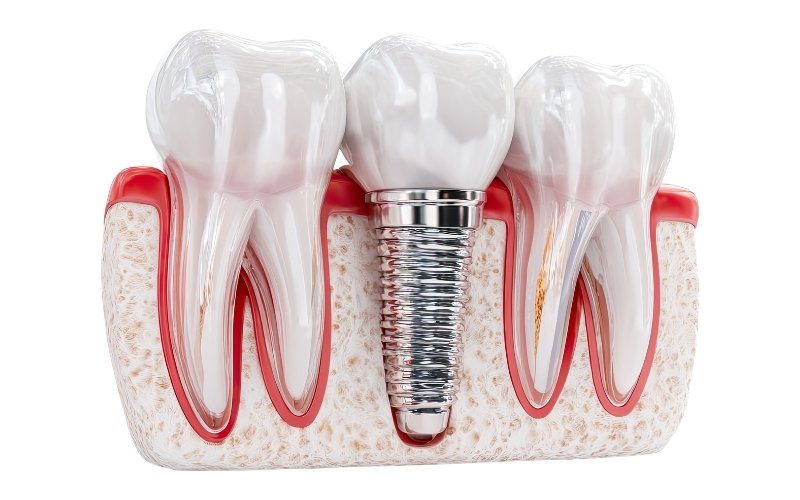
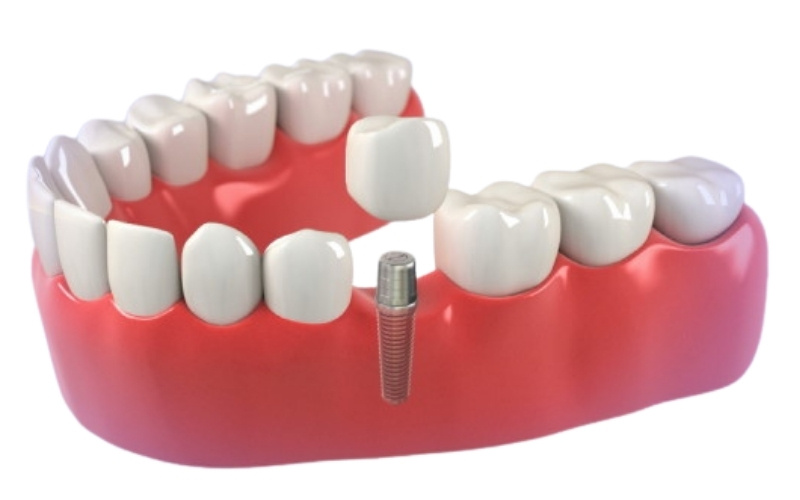
A dental implant is a small titanium post placed into the jawbone to replace a missing tooth root. Once it heals, it supports the visible replacement tooth above the gumline, so the treatment includes both the implant itself and the final tooth that sits on top.
Each implant has three main parts:
- The implant post, which is embedded in the bone.
- The abutment, which connects the post to the restoration.
- The crown, bridge, or denture that is placed on top.
What sets implants apart from other options for replacing missing teeth is a process called osseointegration. This is the healing process in which bone grows around the implant surface, securing it in place.
Simply put, the implant becomes anchored in the jaw. That bond is what gives implants their long-term stability for biting, speaking, and daily function, though healing time can vary from patient to patient (usually 3 to 6 months).
Table of Contents
Real Patient Reviews, Before/Afters & Case Studies
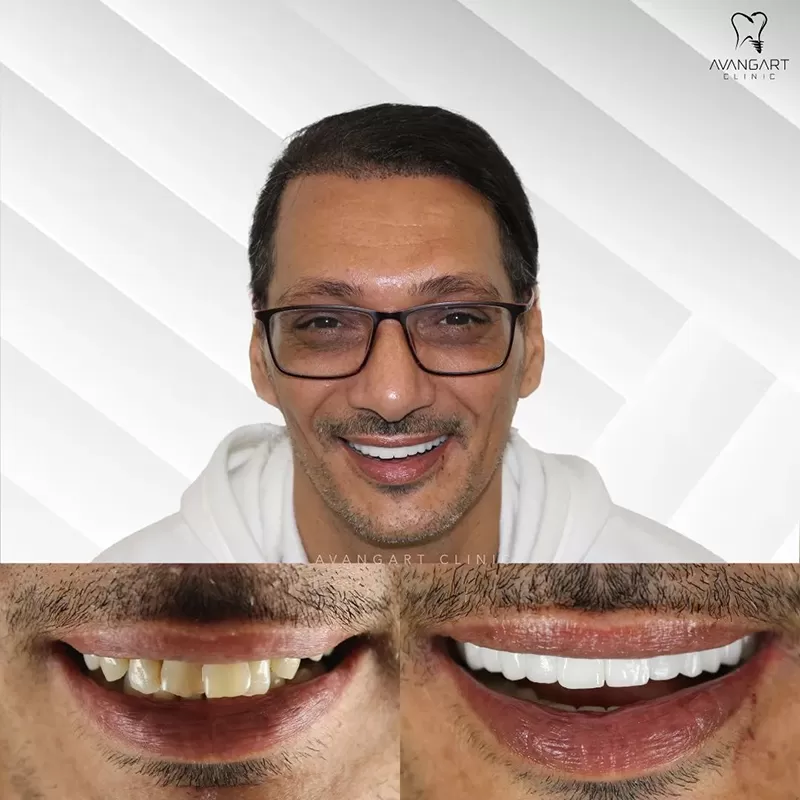
Before you make a decision, we believe you should be able to see real evidence of the clinic’s work. That is why we show before-and-after cases, patient stories, and real treatment examples, so you can see the quality of the work for yourself.
You can explore real patient feedback through our video testimonials, written reviews, and before-and-after cases. We also share verified review sources such as Google reviews and our Trustpilot profile, so you can compare patient experiences and do your research with confidence.
What matters most to us is not just how white or bright a smile looks in a photo. What really matters is whether the result looks balanced, natural, and truly suits the patient’s face and bite. That is why we encourage patients to look at full smile cases, not only close-up tooth shots.
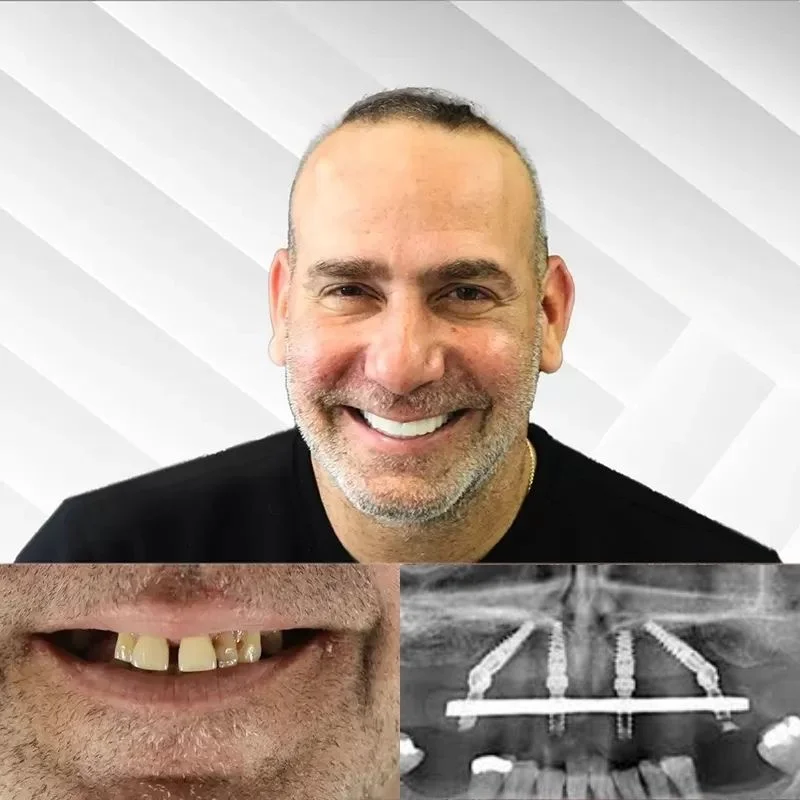
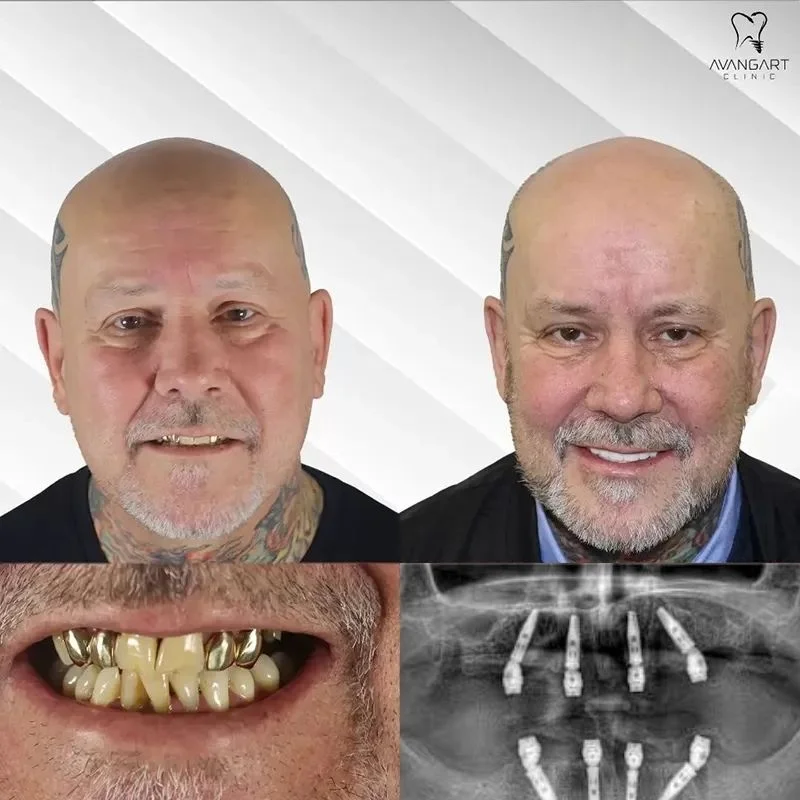
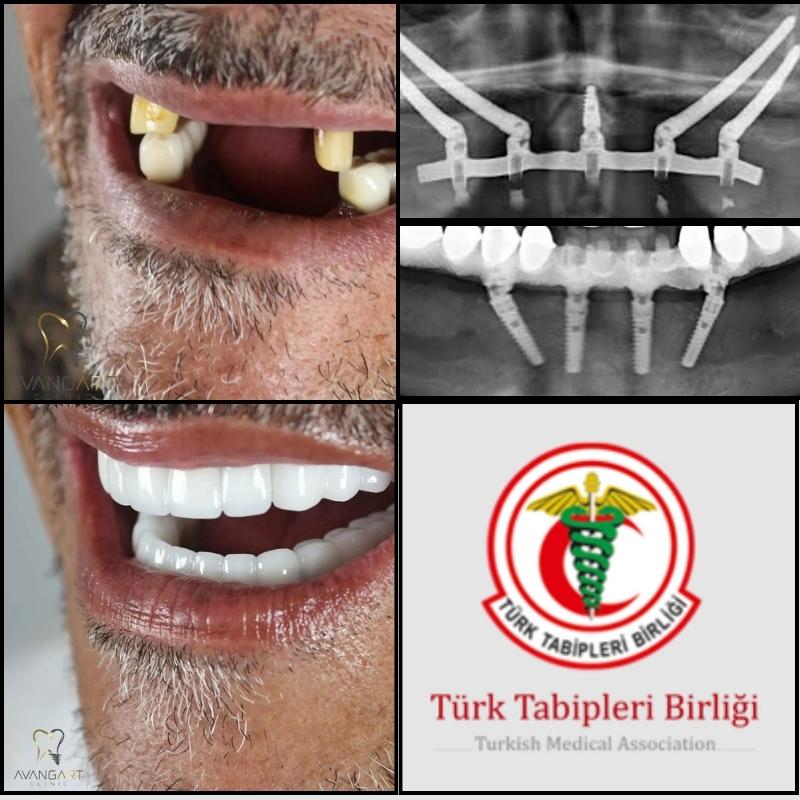
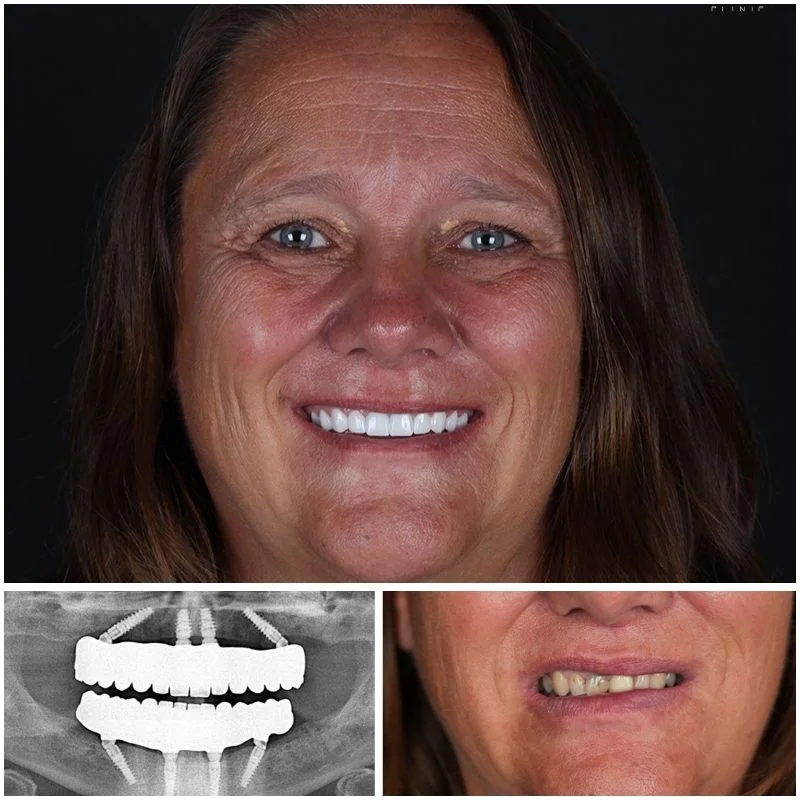
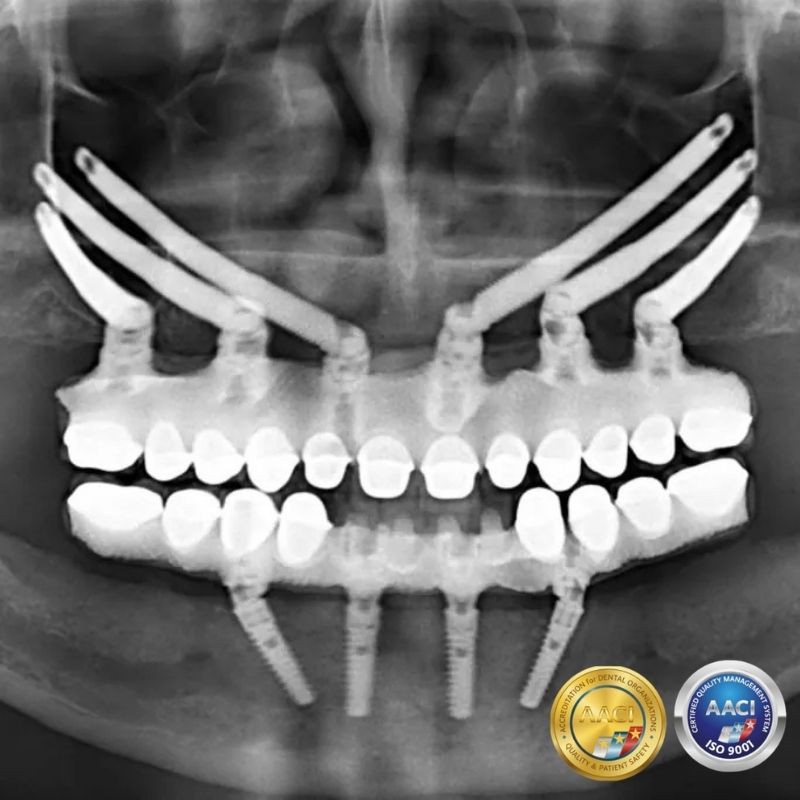
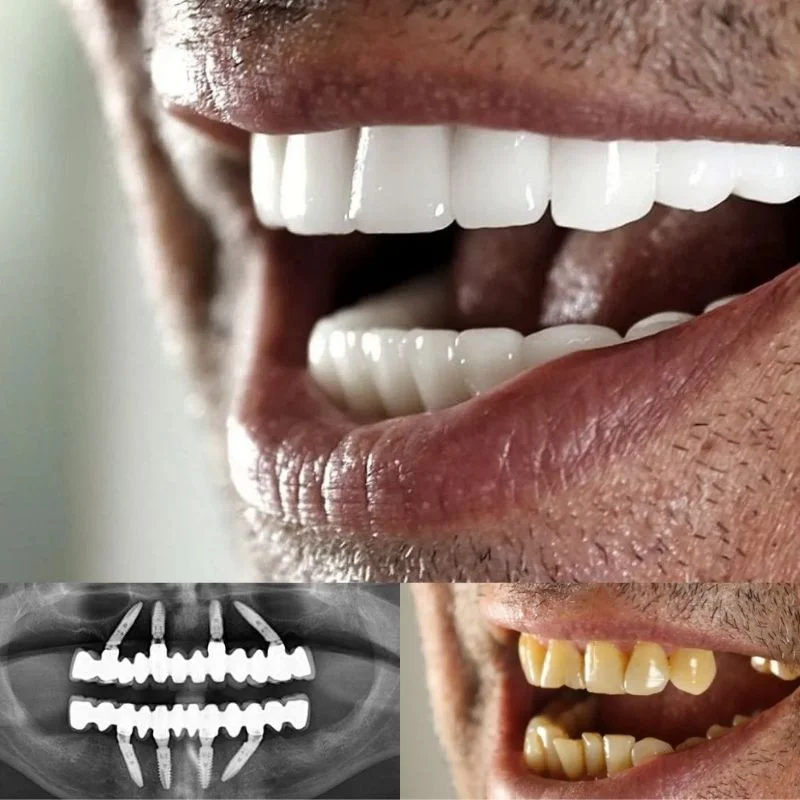
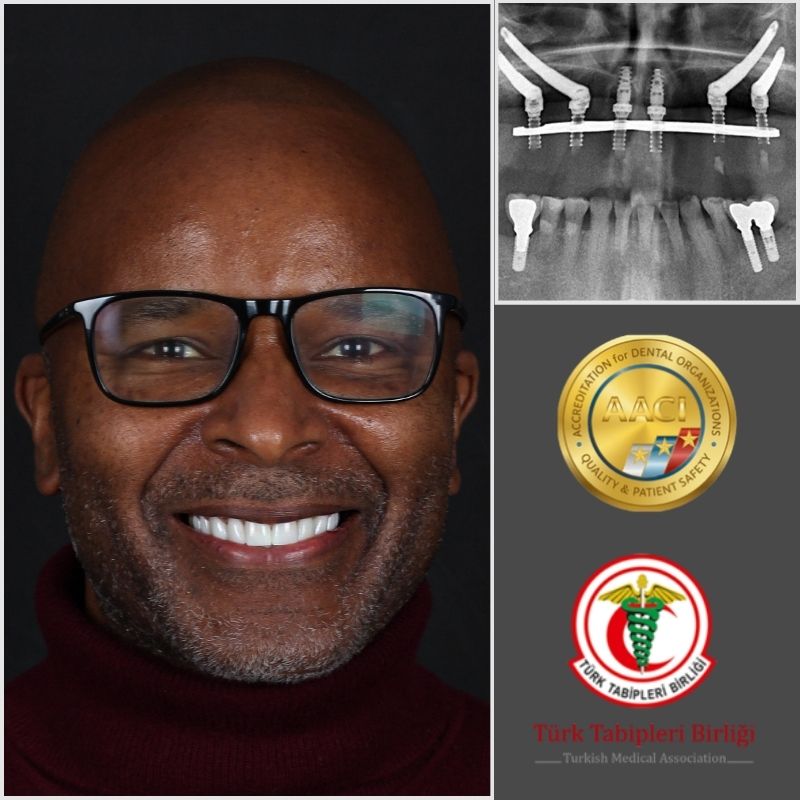


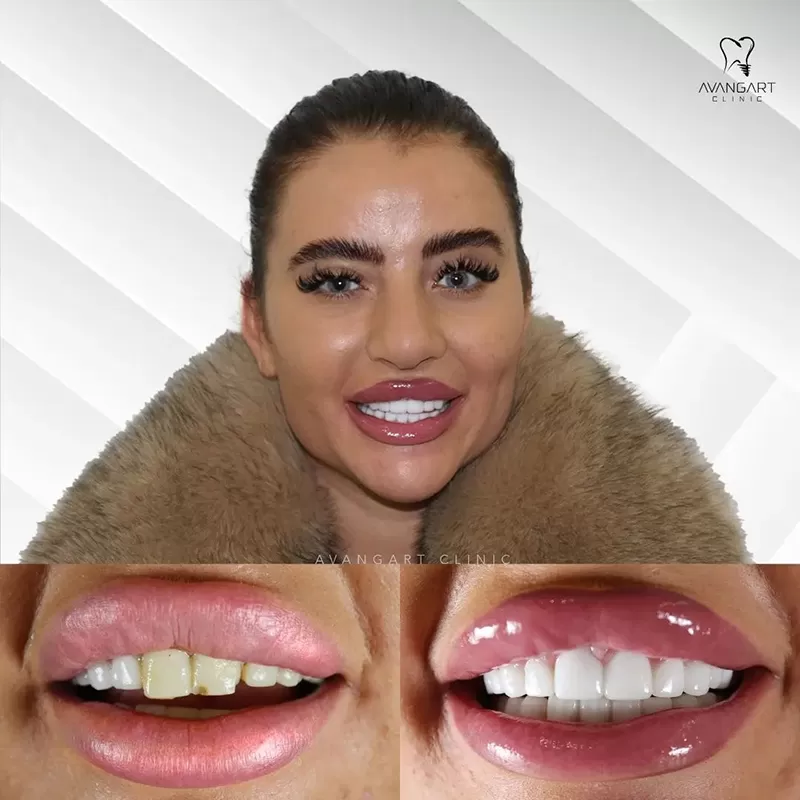
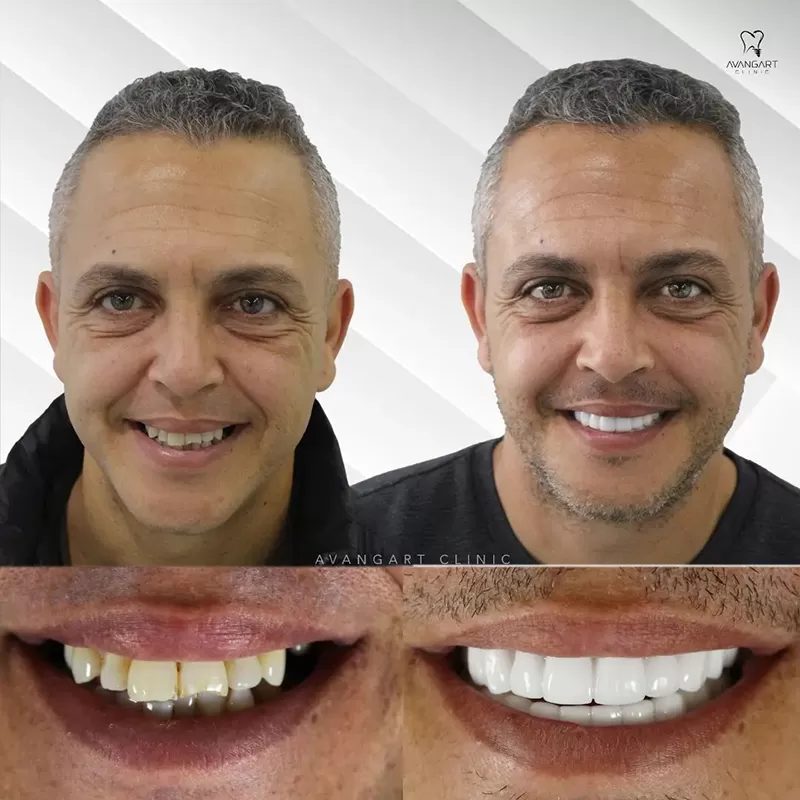
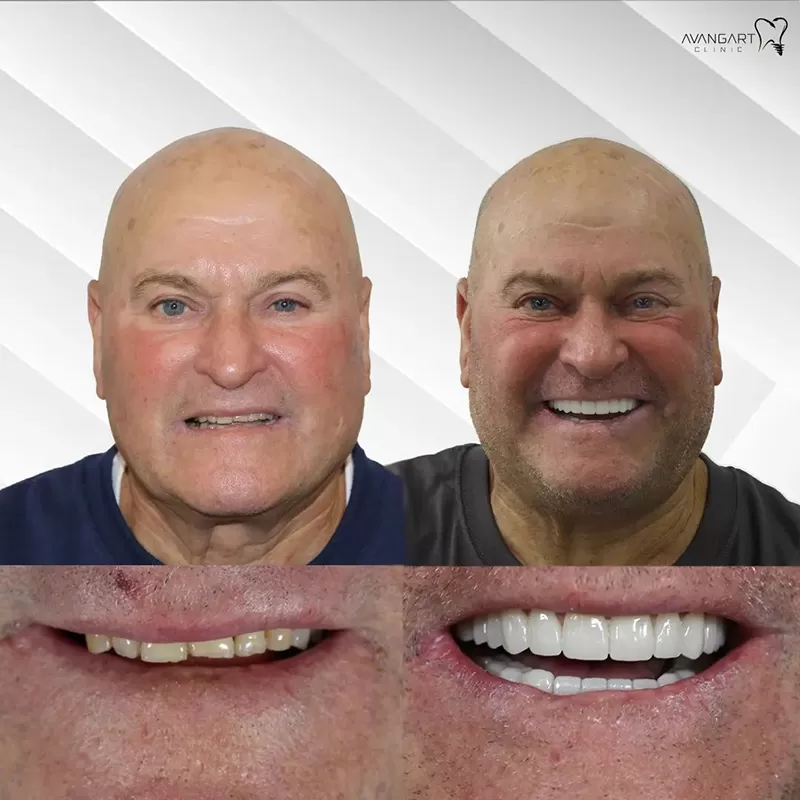
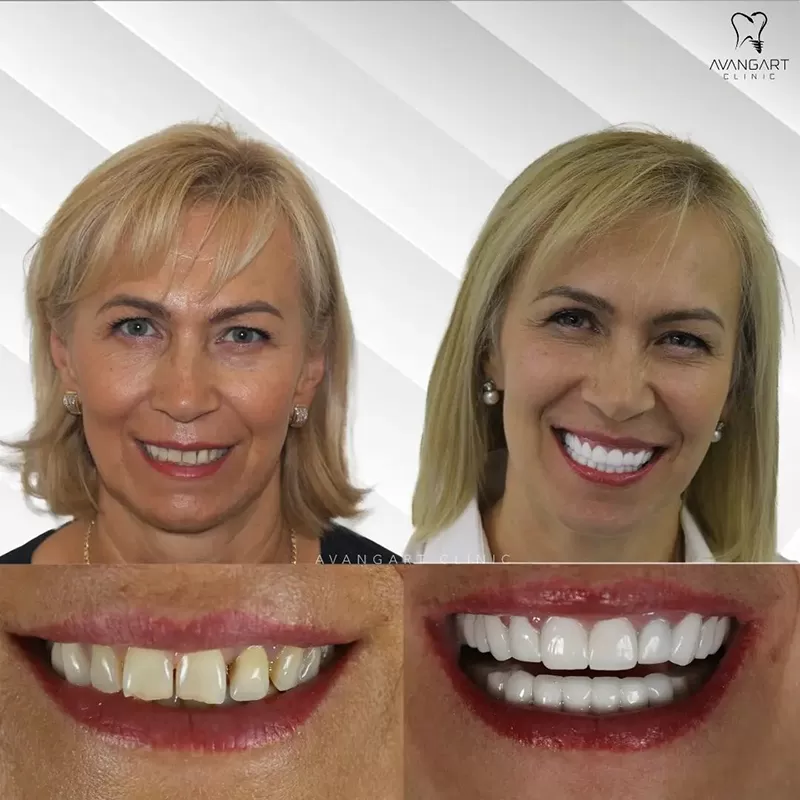
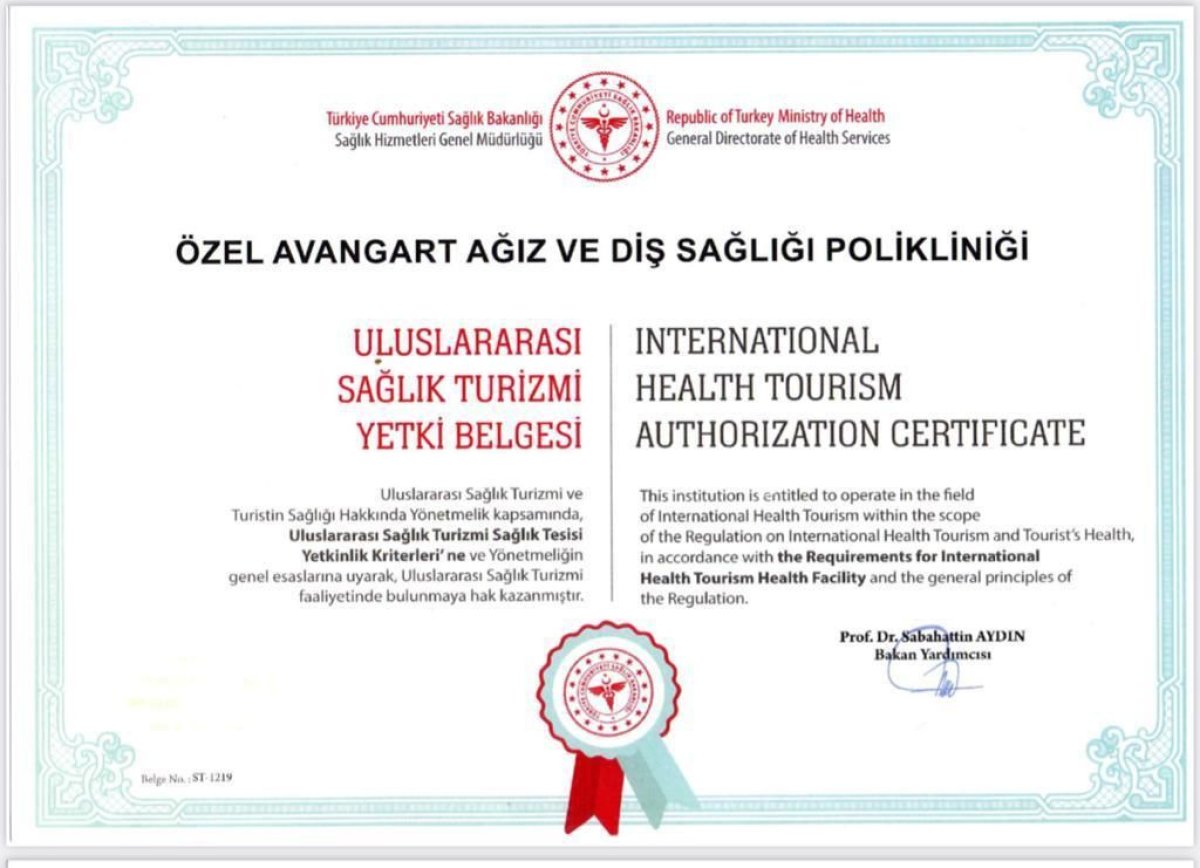
Avangart is officially authorised by the Turkish Ministry of Health for international health tourism.
Types of Teeth Implants Offered at Avangart Clinic
Cost-Effectiveness: Turkey vs. UK & USA
Many patients are surprised by how much less dental implants can cost in Turkey compared with private treatment in the UK or the USA. In most cases, that difference comes down to lower operating costs and favorable exchange rates rather than lower clinical standards. This allows us to offer premium Swiss and German implant systems at a more affordable price.
Affordable Full Mouth Dental Implant Packages in Turkey – 2026 Prices
| Implants | GBP (£) | EUR (€) | USD ($) |
|---|---|---|---|
| All-on-4 (per jaw) | £2800 | €3212 | $3785 |
| All-on-6 (per jaw) | £3600 | €4130 | £4866 |
| Full Mouth Implants (per jaw) | £3600 | €4130 | £4866 |
| Implants | Türkiye | US | UK | Save |
|---|---|---|---|---|
| Single Tooth Implant | From £300 | From $2365 | From £1,750 | Save Up to 83% |
| All-on-4 (per jaw) | From £2800 | From $10746 | From £7,950 | Save Up to 65% |
| All-on-6 (per jaw) | From £3600 | From $14531 | From £10,750 | Save Up to 66.5% |
| Full Mouth Implants (per jaw) | From £3600 | From $10746 | From £7,950 | Save Up to 54.7% |
| Sinus lifting with 2 CC Graft (per side) | From £495 | From $4055 | From £3000 | Save Up to 83.5% |
Average Cost Breakdown by Treatment Type
Here is a simple comparison between our starting prices and the typical price ranges patients often see in the UK and the US:
If you are comparing the teeth implant, the most important question is not only “What is the starting price?” but also “What exactly is included?” Many patients researching Turkish dental implants tell us that this is where quotes can become confusing. We prefer to keep it simple and clear from the beginning.
- For example: two patients may both ask for All-on-6 treatment, but their quotes may still differ. One patient may be ready for immediate implant placement, while another may need extractions, grafting, or a different prosthetic material. That is why we confirm the full plan after your examination and 3D Tomography.
Transparent Dental Implant Costs & VIP Package Deals
When you ask us about tooth implant turkey pricing, we believe you deserve a straight answer. We show clear starting prices and explain what can change the final quote before treatment begins.
Your final fee depends on your 3D scan, bone volume, gum health, the number of implants needed, and the type of final teeth you choose. If you need an additional procedure, such as an extraction or bone graft, we will discuss it with you before treatment starts and include it in your written plan.
Single Dental Implant Cost in Turkey – Prices by Brand & Clinic
| Implant Cost By Brand | Price Per Single Implant |
|---|---|
| Straumann | £700 |
| MegaGen | £300 |
| Swiss | £390 |
What is Included in Our All-Inclusive Packages?
Our all-inclusive implant packages are designed to make treatment easier, especially for international patients. Instead of asking you to organise the clinic, hotel, transfers, scans, and medications separately, we bring the essential parts together in one coordinated plan.
Your package includes:
- the implant itself
- surgical fees
- 3D Tomography
- VIP airport-hotel-clinic transfers
- hotel accommodation
- English-speaking coordinators
- all post-op medications
This matters more than many patients expect. After a flight, most people do not want to arrange transport, search for a hotel, or find the right medication after surgery. Our team helps you move smoothly between the airport, hotel, and clinic, and our coordinators stay available to guide you through each step of the process.
If your case needs anything outside the agreed package, we will explain it before treatment starts. That is how we keep pricing transparent and help you plan your trip with confidence.

Why Choose Turkey for Your Dental Implant Surgery?
The appeal of dental implants abroad in Turkey is not just lower fees. Many of our patients choose Turkey for dental implants not only because treatment can be more affordable, but because they want strong clinical care and a well-organised treatment journey.
One of the first questions many patients ask us is whether dental implant treatment in Turkey is safe. Patient safety is regulated by the Turkish Ministry of Health; always verify that your chosen clinic holds the ‘International Health Tourism Authorization Certificate’.
At Avangart, we believe implant treatment should begin with proper diagnostics, a clear treatment plan, and real aftercare support, not just a quote.
World-Class Medical Standards & Maxillofacial Expertise
Türkiye’s health-tourism system is structured, not informal. Clinics and intermediaries working with international patients must hold an International Health Tourism Authorization Certificate, and the Ministry of Health publishes official lists of authorised providers. This matters because implant treatment is not just about replacing a tooth.
In more complex cases, we may need to assess bone volume in 3D, plan around the sinus area, review your bite carefully, and coordinate both the surgical and restorative parts of treatment.
Dentists in Turkey complete five years of university dental training, and many modern clinics use advanced digital tools like CBCT scans, digital imaging, and CAD/CAM technology to plan implant placement and produce more precise restorations.
Are You a Suitable Candidate for Dental Implants?
Dental implants are not the right option for everyone straight away, and that is why a thorough assessment matters.
Ideal Candidate Profile
In general, the best candidates have healthy gums, enough bone to support the implant, good daily oral hygiene, and a fully developed jaw. Implants are usually not placed before growth has finished, which is why treatment is commonly delayed until adulthood.
You are more likely to be a suitable candidate if you:
- Have healthy gums, or gum disease that has already been treated
- Have enough bone for stable implant placement, or are suitable for grafting
- Brush and clean well around your teeth and gums
- Attend dental check-ups and follow aftercare advice
- Do not smoke, or are willing to stop during healing
Good general health also matters. For example, diabetes does not always rule out implants, but it should be well controlled because healing, as well as long-term stability, depends on how well the body responds after surgery.
Contraindications & Bone Density Solutions (Bone Grafting & Sinus Lifts)
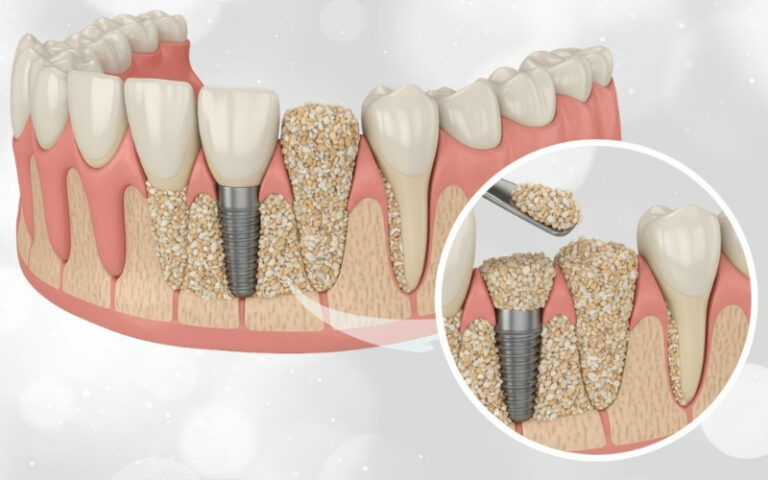
Low bone density does not automatically mean “no.” It often means more planning. If the implant site does not have enough width or height, a bone graft can be used to build up the area so the implant has a safer, more stable foundation.
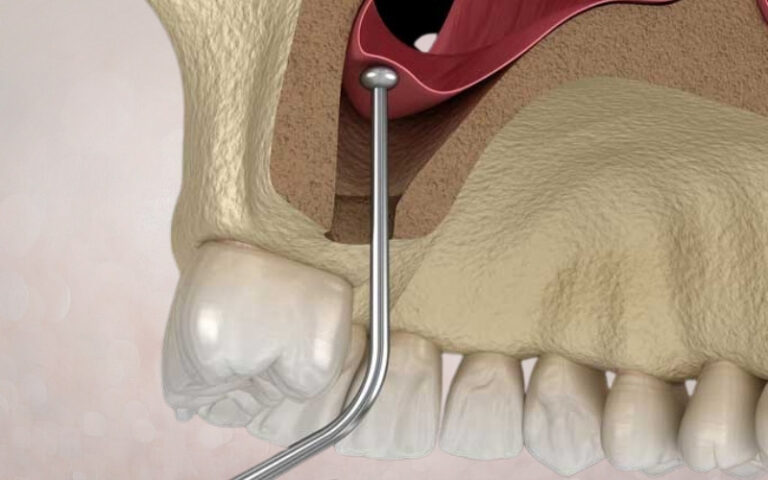
If the missing tooth is in the upper back jaw, the issue is often the sinus sitting too close to the implant site. In that case, a sinus lift may be recommended. This procedure gently raises the sinus lining and adds graft material underneath to create enough bone for implant placement. It is a common part of implant preparation in the upper jaw.
There are also times when implants should be delayed or approached very cautiously. Active or untreated gum disease, severe uncontrolled diabetes, and recent or ongoing head-and-neck radiotherapy can all affect healing and implant success. Some patients may still be treated later, but only after the condition is stabilised and the implant team decides it is safe.
That is why a careful scan and medical review matter so much. Sometimes the answer is “yes, now.” Sometimes it is “yes, but after gum treatment or grafting.” And sometimes the safest answer is to wait or choose another option.
Bone Grafting
Sinus Lifts
Types of Dental Implant Treatments We Offer
We do not treat every missing-tooth case the same way. The best option is determined by the number of missing teeth, the location of the gaps, the amount of bone support available, and the number of teeth you need to restore. Dental implants can be used to replace one tooth, several teeth, or support a full set of fixed teeth.
Single & Multiple Tooth Implants
If you are missing one tooth, a single implant can replace it without drilling or shaving down the healthy teeth next to it. That is one of the biggest practical advantages over a traditional bridge. The implant is placed into the bone and, once healing is complete, fitted with a custom crown designed to match your natural teeth.
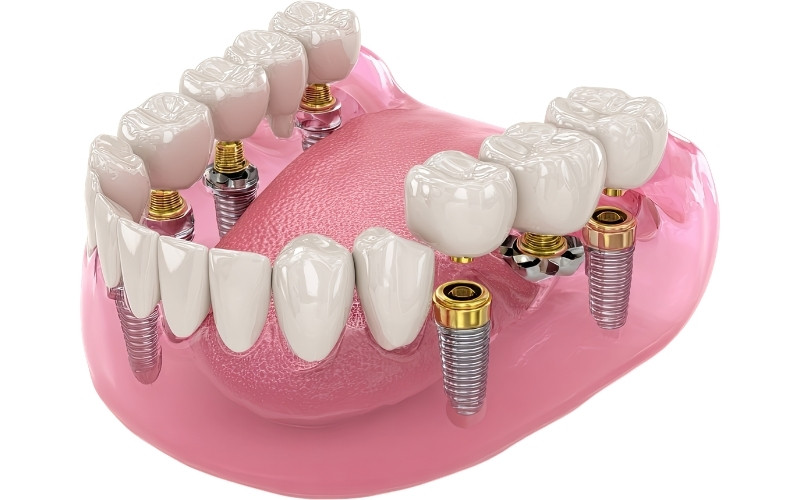
If you are missing a few teeth in a row, we may recommend an implant-supported bridge. Instead of placing an implant for every single missing tooth, we can use strategically placed implants to support a fixed bridge. This restores chewing strength and avoids putting extra strain on neighbouring natural teeth.
Full Mouth Implants (All-on-4 & All-on-6 Techniques)
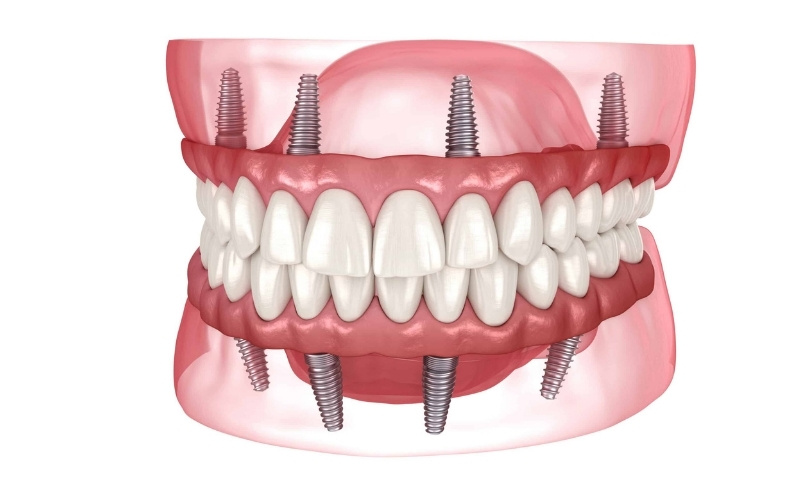
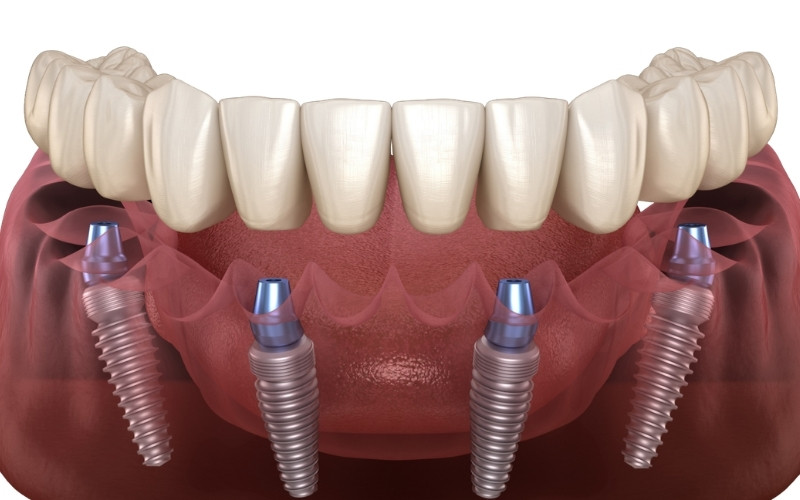
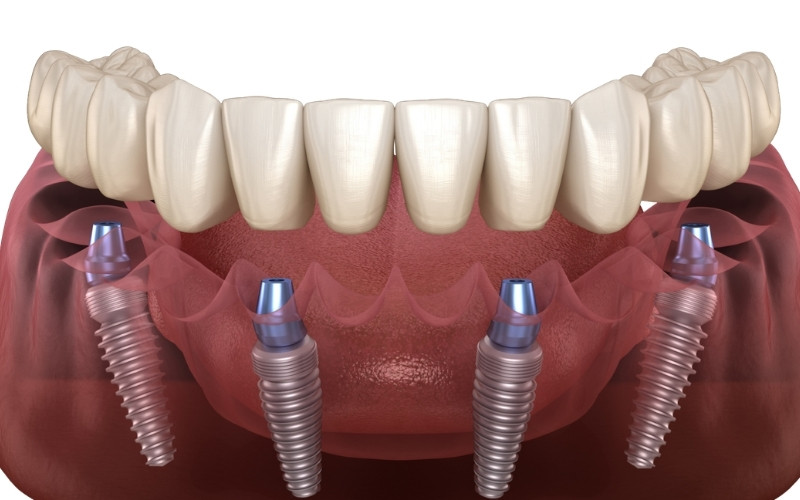
For patients missing most or all teeth in one jaw, full-arch implant treatment can provide a fixed alternative to loose dentures. In an All-on-4 approach, two implants are usually placed toward the front, and two are angled toward the back. That backward angling helps us use available bone more efficiently, can reduce the need for grafting in many cases, and provides better support for the teeth at the back of the bridge.
All-on-6 follows the same full-arch idea but uses six implants instead of four. In simple terms, those extra support points can help spread biting forces more evenly, which may be preferred when bone conditions, bite forces, or prosthetic design require additional support. The best choice is based on your scan, bone volume, bite, and long-term restorative plan rather than a one-size-fits-all rule.
For patients who need wider support across a full arch, All-on-8 may also be considered after reviewing bone volume, bite forces, and prosthetic design.
For the right candidate, teeth that can no longer be saved can sometimes be removed and replaced with temporary fixed teeth on the same day or shortly after. For someone living with loose dentures or badly damaged teeth, that can be truly life-changing. But immediate temporary teeth are only used when the implants achieve the stability needed for safe early loading.
Zygomatic Implants for Severe Bone Loss
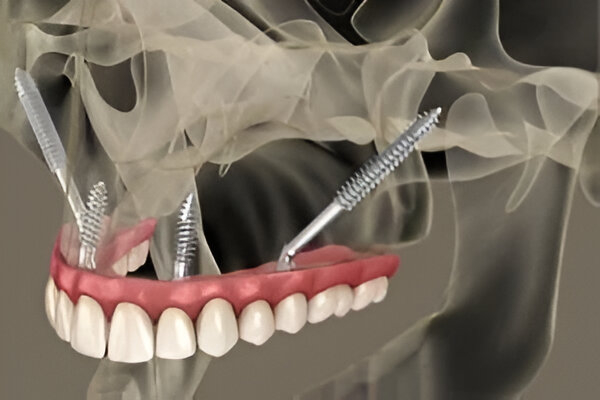
Some patients are told they do not have enough upper-jaw bone for standard implants. In selected severe cases, zygomatic implants may offer another route.
Zygomatic Implants are a life-changing alternative for patients with severe maxillary atrophy. By anchoring into the dense bone of the zygoma (cheekbone), we can achieve immediate loading without the need for extensive, multi-stage bone grafting.
This is not a standard implant procedure offered by every clinic. It is a more advanced treatment used for complex cases, often to avoid extensive grafting in the upper jaw, and in the right situation, it can support a fixed temporary restoration straight away. That is why detailed 3D planning and an experienced surgical team are extremely important here.
Zygomatic Implants:
Implant Brands We Used






Premium Implant Brands & Materials Used at Avangart Clinic
When people compare the best dental implants in Turkey, the brand matters—but traceability matters just as much. At Avangart Clinic, we choose internationally recognized implant systems with a proven clinical history, transparent manufacturer documentation, and original product passports or certificates that patients receive after treatment. That means you know exactly what was placed, including the brand, reference details, and batch or lot information.
For patients researching turkey dental implants, this is one of the easiest ways to spot the difference between a reputable clinic and a sales-driven provider. A real implant passport is not just paperwork. It helps with future maintenance, warranty support, and ordering the correct components years later if you ever need follow-up care in another country.
Top Global Brands: Straumann, Nobel Biocare & Osstem
At Avangart Clinic, implant options are usually explained in clear tiers so patients can match budget, case complexity, and long-term goals.
Straumann:
is positioned as a premium Swiss option with a long clinical track record, global parts availability, and strong brand recognition in implant dentistry.
Nobel Biocare (Danaher)
is another premium choice, with roots linked to the Brånemark research that helped establish modern osseointegration.
Osstem
is the value-conscious alternative for patients who want a reliable, widely used system without moving into the highest price tier.

Zimmer Biomet:
Zimmer Biomet is well-known for producing comfortable and dependable dental implants. Their emphasis on long-term stability lets you know their implants will last. With a solid reputation for quality and innovation, Zimmer Biomet offers solutions that not only repair your smile but also help it look and feel natural.

BioHorizons:
BioHorizons is known for reliable dental implants with an emphasis on comfort and strength. Their unique Laser-Lok technology helps in speedier healing and stability of the implants. Many dentists including us, rely on BioHorizons’ premium implants to enable patients to have a natural and long-lasting smile.
Astra Tech:
Astra Tech implants made in Sweden, are becoming more and more popular for their excellent quality at a reasonable cost. Though less well-known compared to Swiss brands, they are just as durable and offer great aesthetics. Astra Tech implants are a dependable and reasonably priced solution for long-term dental restoration.
The important point is that this is not a “good vs bad” decision. Premium brands like Straumann and Nobel Biocare are often chosen for complex cases, demanding bite forces, full-arch work, or for patients who want the reassurance of a long clinical track record and a wider range of prosthetic options. Osstem is often a smart fit for straightforward cases where cost control matters, but quality still cannot be compromised.
For example, if two patients both need a single back-tooth implant, one may choose Straumann for brand preference and maximum long-term flexibility. In contrast, the other may choose Osstem to keep the treatment budget lower without stepping into unknown or untraceable products. The better option depends on the case plan, not just the logo on the box.
Titanium vs. Zirconia Implants
For most implant cases, Grade 4 and Grade 5 titanium remains the standard choice. Titanium has the longest clinical history in implant dentistry, integrates predictably with bone, and continues to show stronger survival data than zirconia in current comparative literature. Grade 4 titanium is commonly used for many implants, while Grade 5 titanium alloy is used when higher strength and fatigue resistance are needed.
That is why titanium is usually the first recommendation for:
- single implants in high-load areas
- multiple implants
- full-mouth restorations
- complex bite cases
- situations where long-term component compatibility matters
Zirconia implants are the metal-free alternative. They can be considered for carefully selected patients who have a confirmed metal hypersensitivity history or a strong preference to avoid metal altogether. They may also appeal in highly visible front-tooth areas because the white ceramic material can be helpful where gum tissue is very thin.
Still, zirconia is not automatically the “better” or more advanced choice. The evidence base is improving, but titanium still has the deeper long-term track record and usually offers more restorative flexibility. In practice, this means that zirconia can be a good niche option, whereas titanium remains the safer mainstream choice for the majority of patients.
Step-by-Step Dental Implant Procedure & Timeline
If you are researching a tooth implant in Turkey, it helps to learn about our treatment process before you book a flight. For traditional implant treatment, most patients need two separate visits to Turkey: the first for surgery, and the second after healing for the final teeth. The healing period between those visits is usually about 3 to 6 months.
Step 1: Free Online Consultation & 3D Treatment Planning
Before you travel, you can send us your panoramic X-ray and a few clear mouth photos on WhatsApp, along with a short note about your dental concerns. We review your case, give you a preliminary assessment, share a cost estimate, and prepare a customized treatment plan so you can understand the likely timeline before booking flights.
This first review is designed to make your trip more predictable. If we see anything that may affect the plan, such as low bone volume or the need for extractions, we will tell you early. Your final surgical plan is then confirmed at the clinic with a 3D Tomography (CBCT) scan, because that scan shows the bone, roots, and jaw structure in much more detail than a panoramic image alone.
Step 2: First Visit (Surgery & Temporary Teeth)
Most of the time, your first visit is a short surgery trip that lasts between three and five days, depending on your case. When you get here, we will take care of your transportation and hotel check-in. At the clinic, we carry out your in-person examination, take your 3D CBCT scan, and confirm the final surgical plan before treatment begins.
On surgery day, we numb the area with local anesthesia, remove any teeth that cannot be saved if needed, and place the implants in the planned positions. For many full-arch cases, we fit temporary teeth before you leave, so you don’t have to live without teeth while the implants heal.
Step 3: The Healing Period (Osseointegration)
After the first visit, your body needs time to bond naturally with the implants. This phase is called osseointegration, and it usually takes 3 to 6 months. During this time, the surface of the implant and the bone around it slowly fuse together to make the strong base that your final teeth will rest on.
This waiting period is not a pause in treatment. It is one of the most important parts of treatment. Rushing to final teeth before the implant is fully stable can affect long-term success, which is why we take healing seriously and give you clear aftercare guidance for the months between visits.
Step 4: Second Visit (Permanent Crowns/Prosthetics)
Your second visit is the finishing stage, and it is usually planned as a 5 to 7-day trip depending on how many teeth are being restored and how much laboratory work is needed. At this stage, we check healing, place the abutments when needed, take your final digital records or impressions, and refine the bite, shape, and shade of your new teeth.
We then fit your final prosthetics permanently. For single-tooth or smaller restorations, the final result may be a custom crown, such as Zirconium Crowns or another ceramic restoration, depending on the clinical plan. For full-arch cases, we choose the final material based on what will give you the best combination of strength, comfort, bite balance, and long-term durability.
Pain Management, Recovery & Aftercare Instructions
One of the first questions many patients ask us is, “Will it hurt?” That is completely normal. Dental implant treatment should not be painful during the procedure itself, because we numb the area fully before we begin.
After surgery, some soreness, swelling, and tiredness are expected. Most patients describe it as manageable and easier than they feared, especially in the first few days when they follow the aftercare instructions closely.
What to Expect During & Immediately After Surgery
During treatment, we use local anesthesia so the area is completely numb. You may feel pressure or movement, but you should not feel sharp pain.
If your treatment plan includes sedation options, we explain them clearly in advance so you know what to expect. The right option depends on the number of implants, the complexity of the case, and your comfort level.
Once the anesthesia wears off, it is normal to have:
- mild to moderate soreness
- swelling for the first 48 hours
- light bruising around the gums or face
- minor oozing on the first day
- Some difficulty chewing hard foods for a short time
Swelling usually peaks in the first 48 hours and then starts to settle. Using a cold compress, resting, eating soft foods, and taking the medications we prescribe are usually enough to keep you comfortable.
For example, if you have a full-arch procedure or several implants placed at once, you may feel more pressure and swelling than someone having a single implant. That does not automatically mean something is wrong. It usually just reflects the amount of treatment completed in one session.
What matters most is whether your recovery follows a normal pattern: discomfort gradually improves, swelling starts to go down, and you feel a little better each day.
We also tell you clearly when to contact us. If you develop heavy bleeding, fever, worsening pain after several days, or swelling that increases instead of improves, you should let us know right away.
Long-Term Maintenance and Oral Hygiene
Dental implants do not get cavities, but they still need daily care. In fact, implants should be cleaned as carefully as natural teeth, and sometimes even more carefully around the gumline.
Your long-term routine should include:
- Brushing twice a day with a soft toothbrush
- cleaning between the teeth or around the bridge every day
- using a water flosser if recommended
- attending regular professional check-ups and hygiene visits
- avoiding smoking, especially during healing
A water flosser can be especially helpful for full-mouth implant bridges, because food and plaque can collect underneath areas that a regular toothbrush cannot fully reach. We often recommend it as part of a simple home-care routine.
- That is because: the implant itself is artificial, but the bone and gum around it are living tissue. That is why daily cleaning matters so much. Good hygiene helps protect the gum seal around the implant and lowers the risk of inflammation over time.
Once healing is complete, most patients return to normal daily life quickly. The patients who do best long term are usually not the ones who do anything complicated. They are the ones who stay consistent with brushing, cleaning between the teeth, and coming for routine check-ups.
Book Your FREE Consultation For Dental Treatments!
Potential Risks & Complications (Your Safety First)
We want to be very clear with you: all surgery carries some risk, and dental implant treatment is no exception. While dental implants maintain a clinical success rate of approximately 95–98%, they remain a surgical procedure with inherent risks such as peri-implantitis or nerve paresthesia.
Possible complications can include:
- infection at the implant site
- implant failure, where the implant does not bond with the bone as expected
- peri-implantitis, which is inflammation and bone loss around an implant
- nerve irritation or damage, which can cause numbness, tingling, or altered feeling
- sinus-related complications in upper-jaw cases if planning is not precise enough
At Avangart, we reduce risk as much as possible before we ever begin treatment. Our 3D tomography gives us a detailed view of your jawbone, nerves, and sinus spaces, so we can choose the safest implant position and angle instead of working by guesswork. This does not make risk disappear, but it helps us lower avoidable complications and plan more safely in complex cases.
We also pay close attention to the factors that can influence healing and long-term success, such as bone quality, gum health, smoking, diabetes, a history of gum disease, and how well you will be able to clean around the implant afterward. That matters because implant problems are often related to plaque control and personal risk factors, not just what happens on the day of surgery.
Book Your FREE Consultation For Dental Treatments!
Start Creating Your Treatment Plan!
You can contact us by filling out the pre-request form.
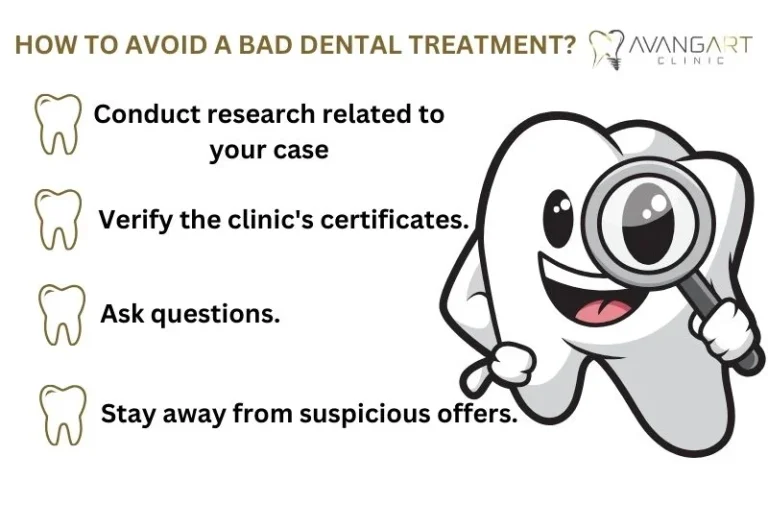
International Aftercare & Complications Management: The “What If?” Plan
The biggest concern for any international patient is: “What happens if something goes wrong when I’m back home?” At Avangart Clinic, we bridge the distance with a structured protocol designed to ensure you are never left without professional guidance.
Your Digital Medical "Bridge"
Before you leave Istanbul, we provide you with a Digital Patient File and an Official Implant Passport. This is your insurance policy for the future:
- The Implant Passport: Contains the exact brand, model, size, and batch number of your implants.
- Surgical Reports: Detailed notes on the torque values and placement techniques used.
- Radiographic Records: Your pre- and post-op 3D scans.
This ensures that if you visit a local dentist for a routine cleaning or an emergency, they have the exact “blueprint” of your treatment to provide safe, informed care.
The Complication Protocol: Step-by-Step
If you experience unexpected pain, swelling, or a loose crown once you return home, we follow a 3-step resolution plan:
- Immediate Virtual Assessment: Contact your Avangart coordinator via WhatsApp with photos/video. Our surgical team reviews these within 24 hours.
- Local Diagnostic Support: If needed, we may ask you to visit a local dentist for a simple X-ray. We can coordinate directly with your local clinician to discuss the findings.
- Resolution Path: Minor issues (like bite adjustments) may be handled locally, while major issues are covered under our warranties and guarantees for repair or replacement at our Istanbul clinic.
Why Trust Avangart Clinic for Your Dental Implants?
Choosing a clinic for implants is not only about price. It is about who is planning your case, how carefully the treatment is carried out, what support you receive after surgery, and whether the clinic is transparent when something is not suitable for you.
At Avangart, your care is planned and delivered by an in-house team, not passed from one outside provider to another. You can also review our doctors’ experience to understand the clinical background behind your implant planning, surgery, and aftercare.
Your records stay in one place, your scans and treatment steps are reviewed together, and the same clinic stays responsible from consultation to follow-up. We are also officially authorised by the Turkish Ministry of Health for international health tourism.
Book Your FREE Consultation For Dental Treatments!
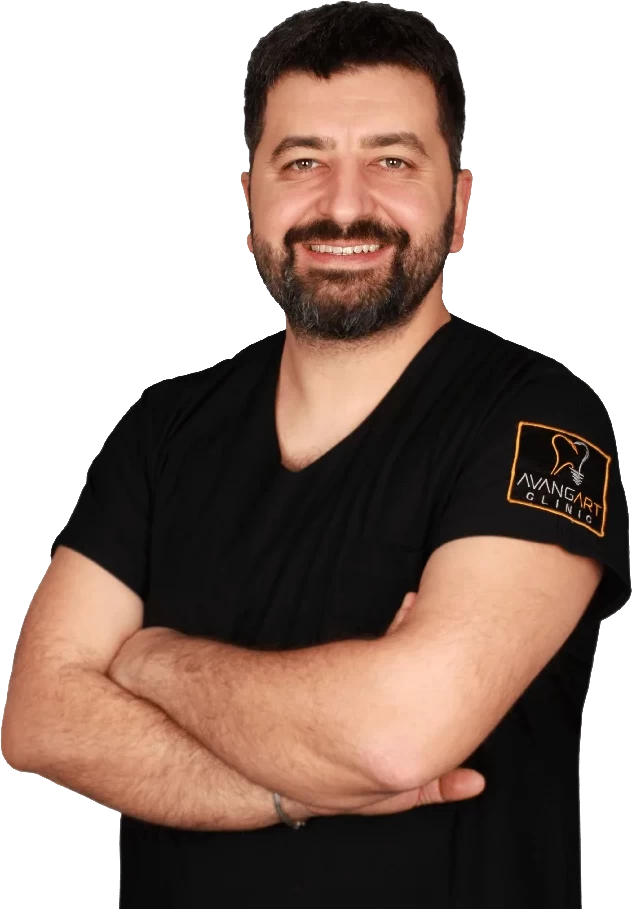
Your surgery is only as good as the hands performing it. Our clinical team is led by Dr. Emrah Yeşilyurt, the innovator behind Toronto Hybrid Technology and Dr. Egemen Aras. Together, they bring over two decades of combined experience in Turkish and international dentistry.
State-of-the-Art Facilities & Hygiene Standards
Our clinic is in a standalone building in Şişli, Istanbul, with 10 dedicated treatment rooms and a separate recovery area for patients who need time to rest after longer procedures. That may sound like a small detail, but organised space matters in surgical dentistry because it supports calmer workflows, clearer coordination, and better patient comfort.
Before surgery, we use 3D tomography to see the bone, nerves, and sinus areas clearly, so your implant treatment can be planned with precision. For your final prosthetic teeth, we use modern digital systems to design and produce crowns and bridges with a more accurate fit, which can help improve comfort and reduce the need for adjustments. Throughout your treatment, we use advanced dental technology such as intraoral scanning, CAD/CAM production, modern restorative materials, and strict sterilisation protocols to help ensure safe, precise, and consistent care.
We follow strict hygiene, infection-control, and sterilisation routines, and we keep traceability records for key items such as implants, graft materials, and restorative products. This means your treatment is clearly documented, with a precise record of what was used and when, rather than handled like a generic package.
Our Warranties & Guarantees
We provide clear written terms before your treatment begins, so you know exactly what is covered. Our warranties and guarantees explain the coverage for implants, crowns, bridges, and other restorations, as well as how eligible repair or replacement cases are handled. If you need support after returning home, our team will review your case and guide you on the next safest step.
Frequently Asked Questions About Dental Implants in Turkey
Dental implants are intended to be long-term solutions, not temporary fixes. Many patients' implants can last for decades if they are properly placed, allowed an appropriate time to heal, and cared for on a regular basis.
That said, not every part of the treatment ages in the same way. The implant screw in the bone often lasts longer than the crown or bridge attached to it, because the visible teeth take the daily wear from chewing and grinding.
We often tell patients to think of implants like a serious long-term investment in their oral health. Good brushing, gum care, regular check-ups, and avoiding smoking all make a real difference to how long they last.
For many patients, yes, it can be. The reason is not simply lower cost. It is the combination of experienced dentists, modern planning, quality implant systems, and a treatment process that feels clear and well organized from start to finish.
What matters is choosing carefully. Traveling for implants is worth it when the clinic gives you a proper assessment, explains your options honestly, uses recognized implant brands, and supports you before, during, and after treatment.
We always encourage patients to look beyond the headline price. Ask what is included in the quote, what implant brand is being used, whether scans and temporary teeth are part of the plan, and what aftercare looks like once you return home.
In most cases, no. A well-planned dental implant should blend in with your smile rather than stand out. The goal is for the final tooth to look natural in shape, color, and position, so it feels like part of your own mouth.
What people usually notice is not the implant itself, but the crown or bridge on top. That is why shade matching, gum balance, and tooth design matter so much. If the visible tooth is made carefully, most people will not know it is an implant unless you tell them.
We always plan implants with both function and appearance in mind. That means considering how the tooth will appear when you smile, speak, and bite, rather than just how it will fit in the bone.
Yes, dental implants are generally a very safe treatment when they are properly planned and placed in the right patient. The important part is not just the surgery itself. It is the full process around it, including your scan, your gum health, your medical history, and the quality of the implant system being used.
At our clinic, we do not treat implants as a one-size-fits-all procedure. We first check whether the patient’s bone support is strong enough, whether the gums are healthy, and whether there are any medical factors that could affect healing. That careful planning is a big part of what makes implant treatment safe.
Implants, like any other surgical procedure, carry some risks, including infection, poor healing, and implant failure. But when the case is selected well, and the aftercare is followed properly, complications are usually uncommon.
A healthy implant should not feel loose or fall out. Once it has healed properly and bonded with the bone, it is meant to stay firmly in place.
If an implant becomes loose, it usually indicates that something has interfered with the healing or long-term support surrounding it. This could be due to poor bone integration, implant infection, heavy bite pressure, smoking, or poor gum health over time.
Sometimes, patients think the implant has fallen out when it is actually the crown or bridge on top that has loosened. That is very different from the implant itself failing. If something does not feel right, it should be checked early, because acting early often makes the problem much easier to treat.
The honest answer is that there are two timelines: the procedure itself and the full treatment journey.
Placing a single implant is often much quicker than patients expect. But the full process usually takes longer because the implant needs time to heal and bond with the bone. Initial healing is often around a week, while osseointegration can take roughly 3 to 6 months before the final crown, bridge, or denture is fitted.
In some cases, treatment moves faster. In others, it takes longer because of extractions, bone grafting, sinus work, or the need to let an infected area heal first. We always plan the timeline around what is safest and most predictable for your mouth, not just what is fastest.
Yes, often you can. Some patients are suitable for immediate implant placement, which means the implant is placed at the same appointment as the extraction.
But this is not right for everyone. It usually depends on factors like infection, bone quality, gum condition, and whether the implant can be placed with enough stability on the day. If the site is not ideal, we may advise waiting for healing before placing the implant.
In simple terms, sometimes the answer is “yes, on the same day,” and sometimes it is “yes, but after healing.” We make that decision based on what gives you the strongest long-term result.
There is no fixed upper age limit for dental implants. What matters more is your general health, your bone support, and whether you can heal well and maintain the implants properly. The Royal College of Surgeons' guidance states there is no upper age limit, provided the patient can tolerate treatment, and there are no major complicating factors.
For younger patients, the key issue is jaw development. Implants are usually delayed until facial and jaw growth has finished. The American Academy of Implant Dentistry notes this often means waiting until around age 16 for girls and 18 for boys, though individual growth patterns vary.
So the real question is not “Am I too old?” It is “Is my mouth and overall health suitable for implant treatment right now?” That is what we assess carefully before recommending anything.
Contact us as soon as possible. Do not wait and hope it settles on its own.
If an implant, crown, or bridge feels loose, avoid chewing on that side and do not try to tighten, push, or test it with your fingers or tongue. Sometimes the implant itself is not failing at all. It may be the crown or abutment screw on top that has loosened, which is a very different issue.
The earlier we assess the problem, the easier it often is to manage. Whether it is soreness, swelling, a loose crown, or something that simply does not feel right, we would always rather hear from you early and guide you properly.