
Is It Worth Going To Turkey For Dental Implants?
Dr. Emrah YEŞİLYURT
Dr. Emrah Yeşilyurt is the Founder of Avangart Clinic. He combines advanced dental expertise with a genuine commitment to helping patients feel comfortable and informed about their oral health journey.
Benefits of Getting Dental Implants in Turkey
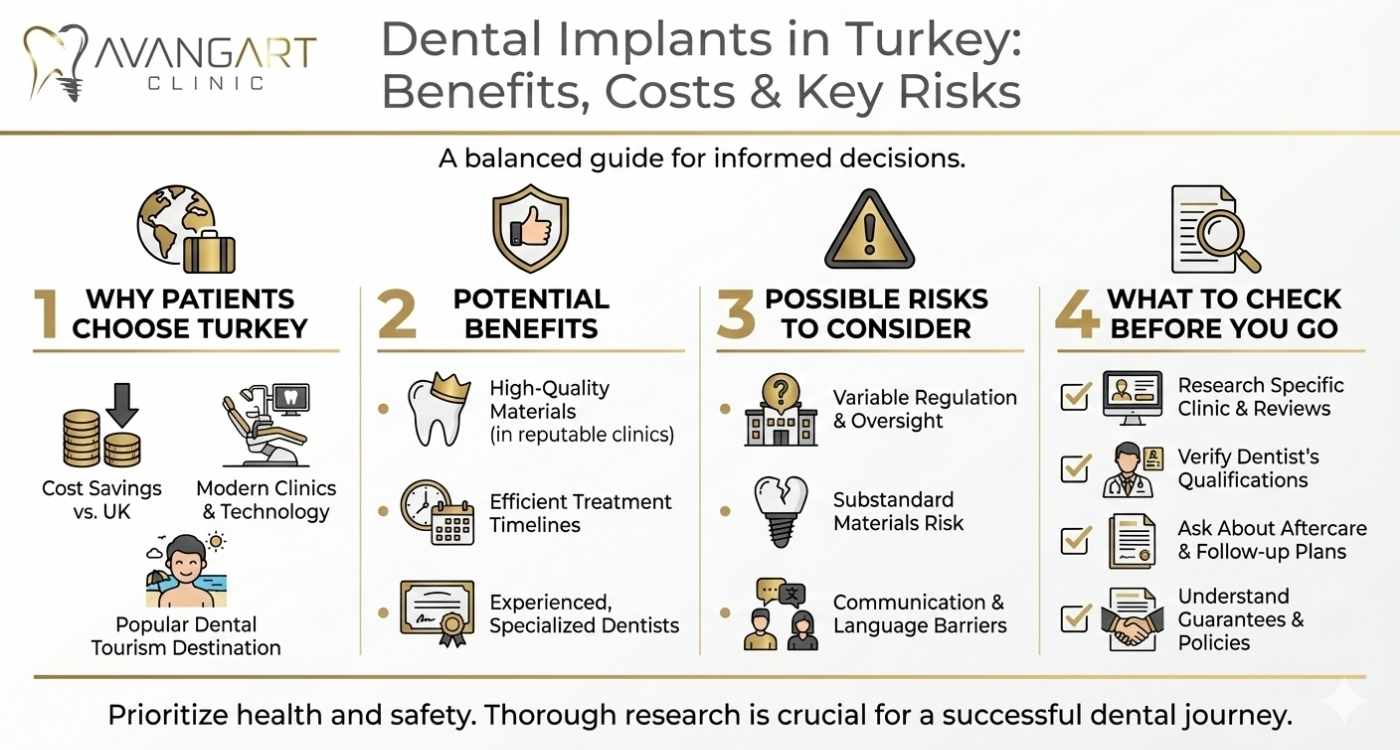
Turkey has become a popular place for many people who want dental implants because they are affordable and the care is excellent. Is it worth going to Turkey for dental implants? The answer is yes for many reasons, including the fact that the costs are much lower and there are more treatment options. Turkish clinics provide a variety of services that meet international standards. Their dentists are highly trained and use the latest technology.
Along with cost savings, Turkey’s rich cultural history and scenic landscapes offer a unique chance to combine dental care with a vacation. You can get world-class dental care for a fraction of the cost you would pay in your country while also exploring a country known for its tourism. Given these advantages, it is no surprise that dental tourism in Turkey is rapidly gaining popularity.
Satisfied Patient Reviews
EXCELLENTTrustindex verifies that the original source of the review is Google. Service impeccable. Je suis venue pour des implants. La prise en charge a été rapide et la douleur pendant et après l’opération a été à peine ressentie. Clinique très professionnelle et chirurgien expert. Personnel très accueillant, en particulier la Directrice. Recommande à tous ceux qui sont à la recherche de professionnels pour régler des problèmes dentaires Suis venue finaliser la pose des implants et des couronnes. Résultat impécable!Posted onTrustindex verifies that the original source of the review is Google. I visited from England and had a positive experience. I went for a Hollywood Smile look and couldn’t be happier with them. The clinic was very aesthetic & clean, the staff were very attentive and supportive & I high recommend them.Posted onTrustindex verifies that the original source of the review is Google. İmplantlarımı ve zirkyonyumlarımı yaptırdım 2 sene önce iyiki yaptırmışım çok memnunum doktorum emrah hoca işinde çok iyi birisi tüm çalışanlara çok teşekkür ediyorum güler yüzlü anlayışları için gülşah hanıma ayriyetten teşekkür ederim 🌹Posted onTrustindex verifies that the original source of the review is Google. Çok güzel ve güveninirPosted onTrustindex verifies that the original source of the review is Google. Friendly and approachable staff, above all I haven’t experienced any pain what so ever, it does truly shows core professionalism. Coming from Wolverhampton, UK and made implant surgery with sinuslifting Gedi JafarPosted onTrustindex verifies that the original source of the review is Google. Ik Marco, hebt mijn gebit laten doen bij Avangart.. En ben door lieve mensen goed ontvangen en behandeld.. Kliniek zeer hygienisch en goede apparatuur.. Deze kliniek zo ik zeker aanraden om je laten behandelen..😁Posted onTrustindex verifies that the original source of the review is Google. I traveled from the U.S. and had Avantgart Clinic positively transform my smile in a manner that I wouldn’t have conceived as being possible. Dr. Egemen, a true master in his field, was patient, considerate, and communicative throughout the process and his assistant, Sevim, was a real joy to work with. Together, the two of them combined to make the overall experience much greater than I could have ever hoped for, and the end result is a smile that is on par with the most glamorous of Hollywood stars. I am extremely satisfied and would highly recommend Avangart Clinic to anyone looking to enhance their smile at a great price and of the highest quality.Posted onTrustindex verifies that the original source of the review is Google. Herkes mükemmel ıscılık mükemmel teşekkür edıyorumPosted onTrustindex verifies that the original source of the review is Google. Emrah bey‘in diş konusundaki tecrübesi, güler yüzü ve uzmanlığı nedeniyle diş tedavilerim için her seferinde Avusturya‘dan İstanbul’a gelmekteyim. Diş kliniği de son teknolojik donanıma sahip güven verici muayenehaneler içermekte.Posted onTrustindex verifies that the original source of the review is Google. Güler yüzlü ekip, temiz ve modern bir klinik. Tedavi sürecim baştan sona çok profesyoneldi. Gönül rahatlığıyla tavsiye ederim.Verified by TrustindexTrustindex verified badge is the Universal Symbol of Trust. Only the greatest companies can get the verified badge who has a review score above 4.5, based on customer reviews over the past 12 months. Read more
Qualified and Experienced Specialists:
One of the best things about getting dental implants in Turkey is that you can get care from highly trained and experienced doctors. Dentists in Turkey, like those at Avangart Dental Clinic, are highly trained, with many having international experience and a thorough understanding of current dental techniques. Many of these professionals have international experience and keep up with the latest techniques to ensure patients receive the best possible care.
These professionals have extensive experience helping international patients, and they use high-quality materials to achieve long-term results. Whether you are a candidate for dental implants and require a full-mouth restoration or just one implant, you can be confident that you are in capable hands.
Strict Hygiene Standards:
Dental implants include a small surgical step, so hygiene matters a lot. Strong infection control helps prevent swelling, infection, and early implant failure.
Reputable clinics ensure that tools are cleaned and sterilized for each patient. They seal sterilized instruments in packs, and they use disposable items when possible. Rooms and surfaces are cleaned between visits, and staff wear gloves, masks, and fresh protective covers.
Before you book, ask how the clinic sterilizes instruments and tracks each sterilization cycle. You can also ask what support you get after surgery, since some dentists give antibiotics or a disinfecting mouth rinse when needed.
Use of High-Quality Materials:
One key reason many patients trust dental implants in Turkey is the emphasis on durable, well-tested materials. Implant posts are commonly made from titanium, which is widely used because it is durable and works well with the body. Many clinics also offer well-known systems and use some of the global best dental implant brands.
The visible parts of the implant matter too, because crowns and bridges take daily chewing forces. Quality options like porcelain or high-grade zirconia can help the final smile look natural and endure over time. When you compare offers between different clinics, check that the quote clearly lists the implant system, the crown material, and any warranties or documentation.
Affordable Without Compromising Quality:
Many people choose Turkey because implant treatment can cost far less than in places like the UK or Western Europe. The lower price is often related to lower daily operating costs, a competitive market, and national support for health tourism. This can make implants feel more reachable without turning it into a luxury purchase.
At the same time, many dental centers use modern imaging, up-to-date equipment, and dentists with solid experience in complex cases. Clinics typically follow international style protocols for planning, surgery, and infection control, which helps protect results. Some clinics offer package pricing that covers scans, local transportation, and temporary teeth during the healing process, making it easier to manage your budget.
To ensure you’re getting the best value, confirm what is included in your quote and what might cost extra.
Comprehensive Aftercare:
Good aftercare is a key part of a smooth implant experience, and many clinics in Turkey give clear support before you travel home. You should expect written instructions on cleaning, brushing, and follow-up timing, plus advice on what is normal during healing. Some dentists also prescribe medicine such as antibiotics or pain relief when it fits your case.
You will usually get guidance on diet after dental implant surgery, so you know what to eat during the first few days. Soft foods, constant hydration, and avoiding very hot, spicy, or hard items can protect the area while it settles. If you have temporary teeth, the team may also explain how to chew safely and how to reduce pressure on the new implants.
Because full mouth cases often involve two visits, aftercare planning also covers the next step. This helps you return for the final teeth when the implant has fully fused with the bone.
Before and After: Transformative Results with Avangart Clinic
We carry out all our dental treatments with care and strive to give your smile an elegant appearance.


International Licensing and Certification:
Licensing and certification can help you feel safer when you are choosing dental implants in Turkey. Many reputable clinics and dentists hold the required national licenses, and some also follow international style standards for quality and patient safety. This matters because implants are a medical procedure, not a quick cosmetic service.
If you ask, a good clinic should be open about its credentials and show you proof. You can request information about the dentist’s qualifications, the clinic’s operating licenses, and how they comply with safety regulations. Some places also document their sterilisation process and the implant brands they use, which adds an extra layer of trust.
Before you book, check that the clinic can explain its approvals in clear terms. If the team avoids basic questions, it is a sign to avoid them and keep looking for a more transparent provider.
State-of-the-Art Technology:
Many people are surprised by how modern a lot of implant clinics in Turkey are. Treatment often starts with clear imaging, like panoramic X-rays and 3D scans, so the dentist can see your bone structure and density and plan exactly where each implant should go. When the plan is based on detailed scans, the surgery can feel more straightforward and less stressful.
Digital tools can also improve the look and feel of the finished teeth. Some clinics use small digital scanners rather than messy moulds, which is more convenient for many patients. Careful digital planning allows the team to check the bite, shape, and fit before the permanent teeth are placed.
If you are comparing options, ask what scans are included in the plan and whether they use digital scanning. A clinic that explains its tools in simple terms is often one that plans your case carefully.
Quick and Efficient Treatment:
Another reason people like getting implants in Turkey is that the process is often well-organized and time-efficient. Most clinics plan your appointments in advance so scans, treatment, and checks happen in a smooth order. Some patients start treatment soon after arriving, which can make the trip feel simple and focused.
For full mouth dental implant cases, the timeline is usually split into two visits. The first trip often lasts about a week for scans, any needed tooth extractions, implant placement, and temporary teeth. After a healing period of a few months, you return for the final crowns or bridge once the implants have bonded with the bone.
This structure can save time compared with long waiting lists in most Western countries. It also helps because you know the next steps and travel dates from the start.
Tourism and Treatment in One:
Many people appreciate how a dental trip to Turkey does not have to feel like a medical mission. Turkey is a popular tourist destination, so you can squeeze in some sightseeing between appointments, whether it is a relaxing walk, a delicious meal, or a visit to a historical site. This change in scenery can make the entire process feel lighter.
Implant plans are often set up so your clinic time is grouped together, leaving you free on other days. Some packages also cover simple travel help like airport pickups and hotel arrangements, which makes the trip easier to manage. Once these logistics are taken care of, you can focus on resting and enjoying your time.
Just keep your recovery in mind while you explore. Choose relaxed activities, follow your care instructions, and avoid anything that might put pressure on healing gums.
Personalized Patient Care:
Personal care is a major reason why people have a positive experience with dental implants in Turkey. Most trusted clinics start by listening to what you want, looking at your scans, and then building a plan that fits your mouth and your budget. When the plan is made for you, it is easier to understand the steps and feel comfortable with the decision.
Comfort is treated as part of the job, not an extra. The team frequently explains what they are doing, ensures that the anaesthesia is working properly, and provides clear instructions for the days following surgery. Some clinics also assist with simple logistics, such as airport, hotel, and appointment transfers, relieving you of some of the stress.
Good patient care also shows up in small details. If staff reply clearly, keep you updated, and never rush your questions, that is a strong sign you are in good hands.
Transparent Pricing and Payment Options:
Clear pricing can make planning dental implants in Turkey a lot less stressful. Many clinics offer set packages that include the main steps, such as scans, implant placement, temporary teeth you use while healing, and, in some cases, hotel stays and local transfers. Instead of paying for a variety of separate items, this approach can help you understand the total cost up front.
It is still smart to check the details before you book. Ask for a written breakdown of what is included, what implant and crown materials are used, and which services might be extra. Common add-ons can include bone grafting or a sinus lift, because not every patient needs them.
Payment can also feel more flexible than at home. Some clinics offer more flexible payment options, such as accepting credit cards, allowing payments in installments, or requiring a deposit to reserve your appointment dates. It is easier to compare options and avoid surprises when the prices are clear.
FAQs
It can be worth it if you pick a trustworthy clinic and go in with a clear plan. The prices are often much lower than in the UK, and many places use modern scans and experienced dentists. Before you book, make sure you understand exactly what is included in the plan, how many trips you will need, and what support you will have if you need it after you return home.
It can be a good idea when you research carefully and avoid rushing into a deal. Look for a clinic with proper scans, a written plan, clear communication, and transparent pricing that lists what is included. You should also plan for follow-ups, because some treatments need more than one visit.
Dental work is often less expensive because clinic operating costs are low and the market is highly competitive. Turkey also encourages medical tourism, which boosts package pricing. Costs can vary depending on materials and service level, so compare clinics providing services of the same level.
For many full mouth implant plans, the first visit is often about a week. You usually return for a second visit a few months later, after the implants have healed and fused to the bone. The exact length depends on your case and whether you need extra steps like bone grafting.
What type of dentist does implants? Implants are usually done by a dentist who has extra training in implant work, often an implant dentist, an oral surgeon, or a gum specialist called a periodontist. In many cases, a prosthodontist then designs and fits the crown or bridge that sits on top. When you are choosing a provider, ask who will place the implant, what training they have, and how often they do implant cases.